
IRS Notice CP503 Explained: What It Means and What Happens Next
By IRS Notices Explained Editorial Team | Reviewed for legal context by David McNickel
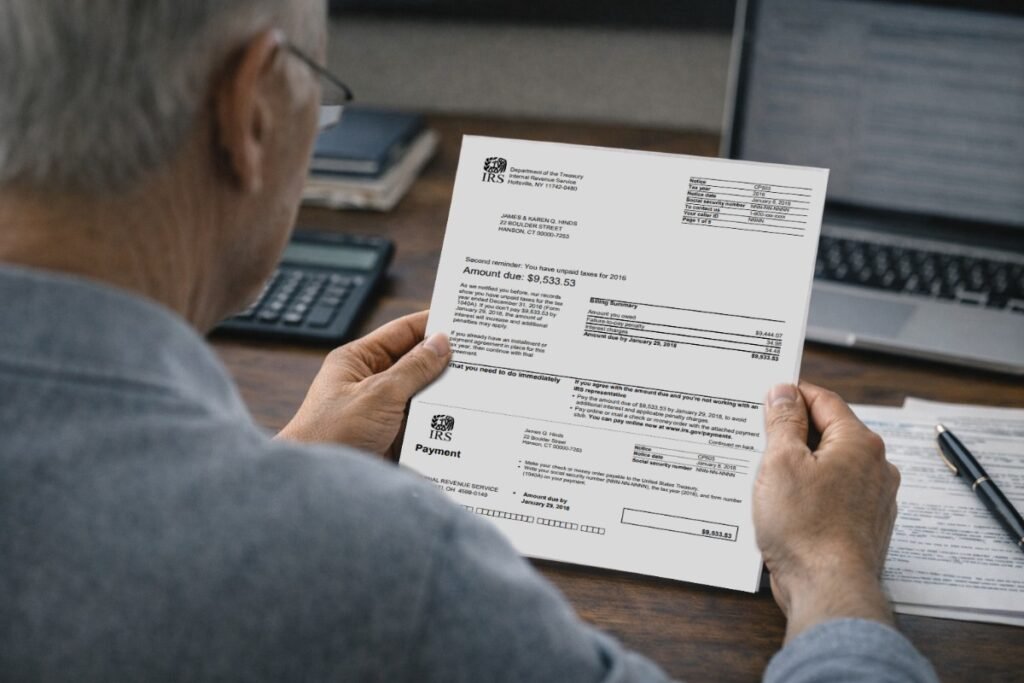
If you’ve received IRS Notice CP503, you’re now at a critical point in the IRS collection process. This is the second reminder notice, sent after both CP14 and CP501 went unanswered or unpaid. The IRS is making it clear that the balance remains unpaid and that further inaction will result in more serious collection efforts.
Your balance has continued to grow with penalties and interest, and the window to resolve this matter voluntarily is narrowing. The CP503 is one of several IRS balance due notices. You can review all notice types in our IRS Notices guide. While the CP503 is still not the final notice, it’s an urgent signal that you need to take action soon to prevent the IRS from initiating enforcement procedures. Understanding where CP503 fits in the collection timeline helps you see how close you are to facing liens or levies.
IRS Notice Deadline Estimator
Estimate the typical action deadline for selected IRS notice types. For informational purposes only.
Estimate Your Timing Window
Select a notice type and enter the date shown on the notice to view the estimated action deadline and related information.
This estimate is based on typical IRS timing patterns for these notice types, includes weekends in the count, and moves deadlines landing on Saturday or Sunday to the next Monday.
What IRS Notice CP503 Is
IRS Notice CP503 is the second reminder notice in the standard collection sequence, sent when payment still hasn’t been received after CP14 and CP501. It typically arrives about 7 weeks after CP501 if the IRS records show no payment or payment arrangement has been established. The notice displays your current balance, which now includes several months of accumulated penalties and interest.
CP503 is more urgent in tone than previous notices, emphasizing the need for immediate payment. While it doesn’t yet threaten specific enforcement actions like a levy or lien, it makes clear that the next notice – CP504 – will be the final one before the IRS can begin those enforcement procedures. The purpose is to get your attention and motivate resolution before the process escalates further.
Why You Received This Notice
You received a CP503 notice for one of these reasons:
- You didn’t respond to or pay the balance shown on CP14 and CP501.
- You contacted the IRS about the debt but didn’t follow through with payment or an installment agreement.
- You made a partial payment but it wasn’t sufficient to satisfy the balance or prevent further notices.
- You’ve been experiencing financial difficulties and haven’t formalized a payment arrangement with the IRS.
- You disputed the amount but the dispute wasn’t resolved or the IRS determined the balance is still owed.
- You sent payment that was delayed, lost, or hasn’t been processed before CP503 was automatically generated.
The tax year and type of tax will be the same as shown on CP14 and CP501, but the dollar amount will be higher due to continued penalty and interest accrual.
What the IRS Is Asking You to Do
CP503 demands immediate payment of the full balance by the date specified, usually within 10 days of the notice date. The notice lists the standard payment methods: online payment through IRS Direct Pay or EFTPS, payment by phone, or payment by check or money order. If full payment isn’t possible, the notice references the option to set up a payment plan and provides a phone number to call. At this stage, the IRS is emphasizing urgency – they want you to either pay now or contact them immediately to make arrangements. The underlying message is that you’ve had multiple opportunities to address this debt, and time is running out before enforcement actions are considered.
While not legally required to respond in writing, failing to take any action after CP503 will almost certainly result in receiving a CP504, the final notice.
What Happens If You Ignore This Notice
Ignoring CP503 brings you to the edge of the IRS’s enforcement authority. The next notice you’ll receive is CP504, typically about 6-8 weeks after CP503. CP504 is titled “Final Notice of Intent to Levy” or similar language, and it’s your legal notice that the IRS intends to seize assets or income to satisfy the debt.
Once CP504 is issued, the IRS can file a Notice of Federal Tax Lien, which becomes a public record and attaches to all your property – real estate, vehicles, financial accounts, and even future assets. They can also issue a levy to take funds directly from your bank account, garnish your wages, or seize other property. These aren’t theoretical threats at this stage – if you ignore CP504, enforcement actions typically follow within 30 days.
Additionally, your balance continues growing with daily compounding interest and monthly failure-to-pay penalties. The financial and legal consequences become much more severe once the process reaches CP504 and beyond.
How This Notice Fits Into the IRS Collection Timeline
CP503 is the third notice in the IRS collection sequence and represents the late reminder stage. You’ve now received the initial balance due notice (CP14), the first reminder (CP501), and now the second reminder (CP503). This means several months have passed since the original balance was established, and the IRS has given you multiple opportunities to pay or make arrangements.
The next and final notice is CP504, which triggers a 30-day countdown to enforcement. Once CP504 is issued, the IRS has the legal authority to proceed with liens and levies. From CP503 to actual enforcement actions, you typically have 2-3 months if you continue to take no action.
However, once CP504 arrives, your options become more limited and the consequences more immediate. CP503 is essentially your last comfortable opportunity to resolve the matter on your own terms before the IRS asserts its collection powers
Common Questions About IRS CP503 Notice
How serious is CP503 compared to earlier notices?
It’s significantly more urgent. It’s the last reminder before the final notice (CP504), which opens the door to enforcement actions like levies and liens.Yes, it indicates the IRS hasn’t received payment after the first notice. While not yet a final notice, it shows the process is escalating.
Is it too late to set up a payment plan?
No, you can still set up a payment plan at this stage. Acting now prevents CP504 and gives you more control over how the debt is resolved.
What if I've been ignoring these notices because I can't pay?
Ignoring notices makes the situation worse. Even if you can’t pay in full, contact the IRS—they have hardship programs and payment options for different financial situations.
Will the IRS definitely seize my assets if I ignore this?
If you ignore CP503 and the subsequent CP504, yes, the IRS can and often does proceed with levies or liens. It’s not automatic, but it becomes highly likely.
Can I still dispute the balance at this stage?
Yes, you can dispute the amount, but you should do so immediately. Contact the IRS and provide documentation supporting your position.
How much has the balance grown since CP14?
It depends on the time elapsed and original balance, but penalties and interest over 3-4 months can add hundreds or thousands of dollars to the debt.
What if I paid but still got this notice?
Contact the IRS immediately with proof of payment. Sometimes there’s a processing lag, but you need to verify your account status.
What Options People Typically Consider at This Stage
When people receive CP503, they tend to move from consideration to action. Many realize this is their last opportunity to handle the matter on their terms and choose to set up an installment agreement immediately, even if it means stretching their budget.
Some people pay the balance in full if they’ve been avoiding the issue but now recognize the severity of potential consequences. Others contact the IRS to discuss their financial situation honestly, exploring options like Currently Not Collectible status if they truly cannot afford any payment, or an Offer in Compromise if they qualify.
Some taxpayers gather all their financial documentation to prepare for negotiations, knowing they may need to prove their financial hardship or inability to pay. At this stage, fewer people choose to wait – the urgency of CP503 makes clear that waiting leads to CP504 and enforcement.
Those who have been considering professional help often make that call after receiving CP503, realizing they need expert guidance before the situation escalates further.
When People Usually Seek Professional Help
CP503 is a common trigger point for seeking professional tax assistance. The urgency of being one notice away from enforcement actions motivates many to hire representation. People with substantial balances – particularly those exceeding $10,000 – often seek enrolled agents or tax attorneys who can negotiate payment terms and potentially reduce penalties.
If multiple tax years are involved or if there are unfiled returns in addition to the unpaid balance, professionals can create a comprehensive compliance and resolution strategy. Those who have ignored previous notices due to anxiety or confusion about the process often find that a professional can remove the emotional burden and handle communications with the IRS directly.
When someone’s financial situation is complex – involving self-employment income, significant assets, or irregular income streams – professionals can present the information in a way that maximizes the chance of favorable payment arrangements. At this late stage, having representation also provides a buffer against making procedural mistakes that could accelerate enforcement.
Key Takeaways
- CP503 is the second reminder and third notice overall in the IRS collection process
- This notice signals you're one step away from CP504, the final notice before enforcement actions
- Penalties and interest have been accumulating for months, significantly increasing your balance
- The next notice (CP504) gives the IRS legal authority to file liens and issue levies
- Taking action now - paying, setting up arrangements, or getting professional help - is critical to preventing enforcement
What To Read Next
This page provides general informational content only and is not affiliated with the IRS or any government agency.