
IRS Notice CP523 Explained: What It Means and What Happens Next
By IRS Notices Explained Editorial Team | Reviewed for legal context by David McNickel
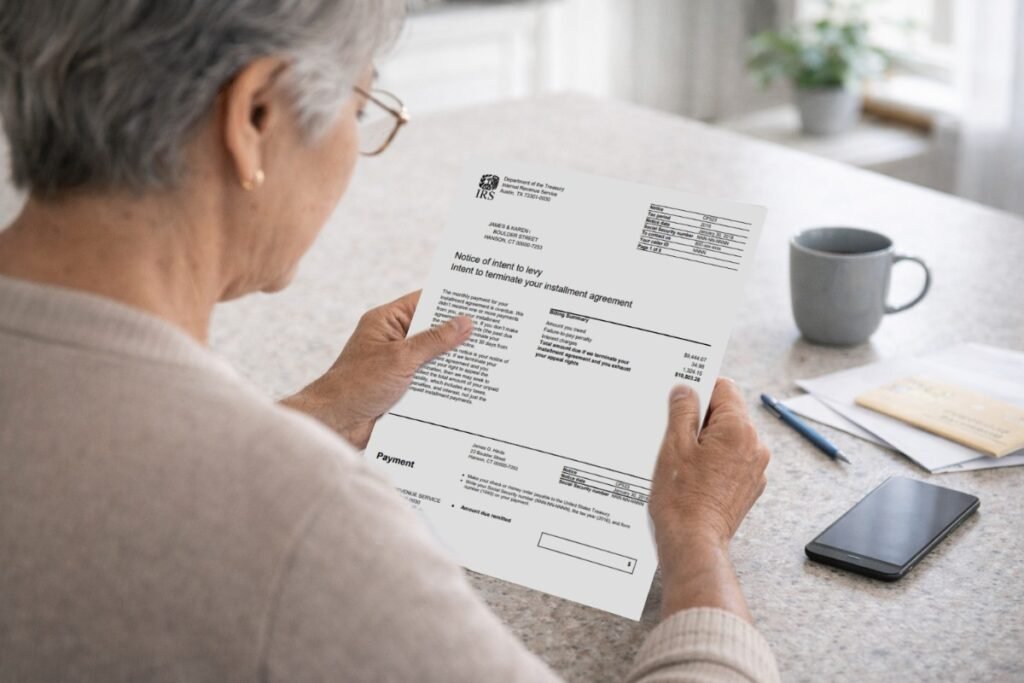
IRS Notice CP523 is a letter informing you that your installment agreement with the IRS has been defaulted and may be terminated. Many people feel worried when they receive this notice, especially if they’ve been working to pay their tax debt through monthly payments.
However, understanding what CP523 means can help you address the situation. This notice indicates that something has gone wrong with your payment arrangement, but you typically have an opportunity to fix it before the agreement is formally ended. This article explains what Notice CP523 is, why you received it, and what typically happens next. The CP523 is one of many IRS notices. You can review all notice types in our IRS Notices guide.
What IRS Notice CP523 Is
Notice CP523 is a default notice that the IRS sends when you’ve missed payments under an installment agreement or haven’t met other terms of the agreement. An installment agreement is an arrangement that allows you to pay your tax debt over time through monthly payments rather than in a lump sum.
When you enter into this agreement, you commit to making regular payments by specific due dates and to meeting other requirements, such as filing all required tax returns and paying any new tax debts on time. Notice CP523 informs you that you’ve failed to meet these obligations and that the IRS intends to terminate your installment agreement if the default isn’t resolved.
The notice typically explains what caused the default – such as missed payments or unfiled returns – and provides information about what you need to do to reinstate the agreement. This notice is serious because once an installment agreement is terminated, the IRS can pursue other collection methods, including levies on your wages, bank accounts, or other assets.
Why You Received This Notice
You received Notice CP523 because the IRS determined you’re not in compliance with your installment agreement. The most common reason is missing one or more monthly payments. If your payment was late or didn’t arrive, the IRS considers the agreement in default. Another common reason is failing to file a required tax return.
Most installment agreements require you to stay current with all tax filing obligations – if you don’t file a return when it’s due, even if you have a payment plan for past years, the agreement can be defaulted. Owing a new tax balance while in an installment agreement can also trigger default. If you file a new return showing you owe additional tax, you’re required to pay that new balance or add it to your installment agreement, and failing to do so can cause default.
Sometimes technical issues cause default, such as a payment that didn’t process correctly or payments that weren’t credited to your account properly. The IRS sends CP523 because it has identified one of these compliance issues and wants to give you notice that your installment agreement is at risk.
What the IRS Is Asking You to Do
The IRS is asking you to take immediate action to resolve the default and avoid termination of your installment agreement. The notice should explain specifically what caused the default and what you need to do to reinstate the agreement. If the default is due to missed payments, you’ll typically need to bring your payments current by paying the missed amount plus continuing with your regular monthly payments.
If it’s due to an unfiled return, you’ll need to file that return as soon as possible. If a new balance is the issue, you’ll need to pay it or contact the IRS to add it to your existing agreement. The notice usually provides a deadline by which you need to act, often 30 days from the notice date. You should contact the IRS at the phone number provided in the notice to discuss your specific situation and understand what’s required to reinstate the agreement.
The IRS wants you to get back into compliance so the installment agreement can continue. If you’re having financial difficulty that prevents you from making payments, the notice may also provide information about requesting a modification to your agreement or discussing other options.
What Happens If You Ignore This Notice
Ignoring Notice CP523 will likely result in the termination of your installment agreement. Once the agreement is terminated, the full balance of your tax debt becomes immediately due and payable. The IRS is no longer bound by the installment arrangement and can pursue collection through other means.
This typically includes issuing levies on your wages, bank accounts, Social Security benefits, or other income and assets. The IRS may also file a Notice of Federal Tax Lien if one isn’t already in place, or take other collection actions. You lose the benefit of paying over time, and the IRS can take more aggressive steps to collect the entire debt. Interest and penalties continue to accrue on the unpaid balance, increasing what you owe.
Additionally, if you later want to set up a new installment agreement after default, the IRS may be less willing to approve it, or may require more stringent terms such as a larger down payment or higher monthly payments. Acting quickly when you receive CP523 is important to preserve your payment arrangement and avoid more serious collection actions.
How This Notice Fits Into the IRS Collection Timeline
Notice CP523 is a mid-stage collection notice that occurs after you’ve already established an installment agreement but have fallen out of compliance. The typical progression looks like this:
- first, you owe tax debt and are unable to pay in full;
- second, you request and are approved for an installment agreement;
- third, you make payments for a period of time;
- fourth, something happens that puts you in default—such as missing payments or failing to file returns;
- fifth, the IRS sends Notice CP523 to inform you of the default;
- sixth, you have an opportunity to reinstate the agreement by resolving the default;
- seventh, if you don’t act, the IRS terminates the agreement and resumes standard collection activities.
CP523 sits between having an active installment agreement and having that agreement ended. It represents the IRS giving you notice and an opportunity to cure the default before moving to termination. After CP523, if you don’t reinstate the agreement, you’ll typically receive notices indicating the agreement has been terminated and that the IRS is proceeding with collection, which may include levy notices. Understanding this progression shows that CP523 is a warning point where you still have the ability to preserve your payment arrangement if you act promptly.
Common Questions About The IRS CP523 Notice
Is this notice serious?
Yes. CP523 means your installment agreement is at risk of termination. If the agreement ends, the IRS can pursue other collection methods including levies.
Do I have to respond?
Yes. Responding quickly is important to reinstate your installment agreement and avoid termination. The notice typically provides a deadline for action.
Does this mean I owe money?
You already owe the underlying tax debt that your installment agreement was covering. CP523 doesn’t create new debt, but it indicates your payment arrangement is in jeopardy.
Is enforcement already happening?
Not yet. CP523 is a notice that your agreement may be terminated, not that it has been. However, if you don’t act, the IRS will move to terminate the agreement and then pursue collection.
What happens if I can't make the missed payments?
Contact the IRS to explain your situation. Depending on circumstances, you may be able to modify your agreement, request reduced payments, or discuss other options.
Can I set up a new installment agreement if this one is terminated?
Potentially, but it may be harder to get approved and the IRS may require more stringent terms. It’s better to reinstate your current agreement if possible.
Does this affect my credit?
The installment agreement itself doesn’t directly affect credit, though any underlying tax liens do appear on credit reports. If the agreement is terminated and collection intensifies, that could have additional effects.
What if the default happened due to a mistake or technical issue?
Contact the IRS immediately to explain the situation. If the default was due to error – such as a payment that wasn’t properly credited – the IRS may be able to resolve it.
What Options People Typically Consider at This Stage
When receiving Notice CP523, people often act quickly to address the default. Some immediately pay any missed payments to bring the account current, allowing the installment agreement to continue. Others contact the IRS right away to explain what happened and discuss what’s needed to reinstate the agreement.
If the default was due to an unfiled tax return, some people prioritize filing that return as soon as possible to comply with the agreement terms. Those who’ve fallen behind due to changed financial circumstances may contact the IRS to request a modification of the agreement, such as lower monthly payments. Some people review their payment records to ensure all payments were properly credited and to understand exactly which payments the IRS considers missing.
Those experiencing temporary financial hardship may explain their situation to the IRS and ask about options for catching up once circumstances improve. If a new tax balance caused the default, some work to add that balance to their existing installment agreement. Each approach depends on the specific reason for default and the individual’s current financial situation.
When People Usually Seek Professional Help
Many people consider professional assistance when dealing with Notice CP523. Common situations include when they’re uncertain why the default occurred or what’s needed to reinstate the agreement. People often seek help when they’ve been making payments but received CP523 unexpectedly, suggesting there may be an error or misapplied payment.
Those who can no longer afford their current payment amount due to changed financial circumstances sometimes consult professionals about modifying the agreement or exploring other options. If someone has multiple tax years involved or complex financial situations, professional guidance may help navigate the reinstatement process. People who’ve tried to contact the IRS but haven’t been able to resolve the default sometimes seek assistance.
Those worried about their installment agreement being terminated and wanting to act quickly to preserve it may consult with tax professionals. Business owners whose installment agreements are in default and who want to avoid disruption to business operations often seek professional help. The decision to seek help is individual and relates to the complexity of the situation and urgency of preserving the payment arrangement.
Key Takeaways
- Notice CP523 informs you that your IRS installment agreement is in default and may be terminated
- Common reasons for default include missed payments, unfiled tax returns, or owing new tax balances
- You typically have a deadline, often 30 days, to resolve the default and reinstate your agreement
- If the agreement is terminated, the full balance becomes due and the IRS can pursue collection through levies and other means
- Acting quickly to address the default is important to preserve your payment arrangement and avoid aggressive collection actions
What To Read Next
This page provides general informational content only and is not affiliated with the IRS or any government agency.