
IRS Notice CP501 Explained: What It Means and What Happens Next
By IRS Notices Explained Editorial Team | Reviewed for legal context by David McNickel
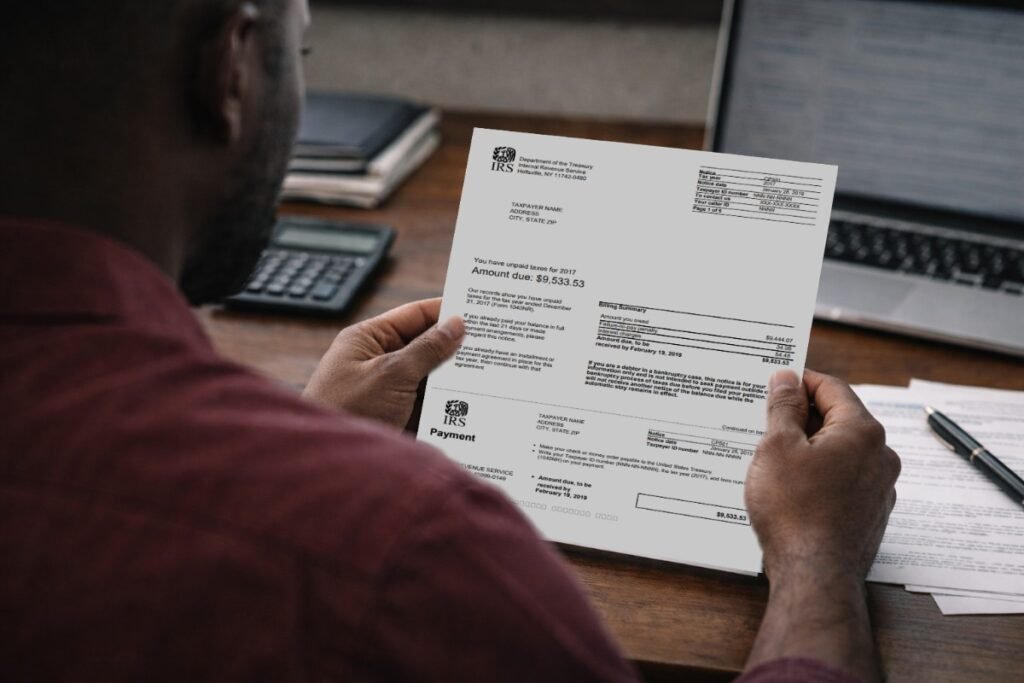
Receiving an IRS Notice CP501 means the IRS hasn’t received payment for a balance you owe, and this is their first reminder. If you previously received a CP14 notice and didn’t pay or make arrangements, CP501 is the next step in the collection sequence.
This notice reminds you of the outstanding balance and adds any penalties and interest that have accumulated since the original notice. While it’s more urgent than CP14, it’s still not a final notice – you have time to respond and resolve the debt before the IRS takes enforcement action. Understanding what CP501 means helps you determine your next steps. The CP 501 is one of several IRS balance due notices. You can review all notice types in our IRS Notices guide.
IRS Notice Deadline Estimator
Estimate the typical action deadline for selected IRS notice types. For informational purposes only.
Estimate Your Timing Window
Select a notice type and enter the date shown on the notice to view the estimated action deadline and related information.
This estimate is based on typical IRS timing patterns for these notice types, includes weekends in the count, and moves deadlines landing on Saturday or Sunday to the next Monday.
What IRS Notice CP501 Is
IRS Notice CP501 is a reminder notice sent when you haven’t paid a tax balance after receiving the initial CP14 notice. It’s typically sent about 5 weeks after CP14 if the IRS hasn’t received payment or been contacted about payment arrangements. The notice will show your updated balance, which now includes additional penalties and interest that have accrued since the first notice.
The CP501 notice serves as a second request for payment before the IRS sends more serious collection notices. Like CP14, this notice doesn’t threaten immediate enforcement actions – it’s still in the reminder phase of the collection process. The IRS is essentially saying, “We still haven’t received payment for the amount you owe – please pay now or contact us to make arrangements.”
Why You Received This Notice
You received CP501 because one or more of the following situations occurred:
- You received CP14 but didn’t make any payment toward the balance due.
- You intended to pay but missed the deadline stated in the CP14 notice.
- You sent a payment but it was lost in the mail or not yet processed by the IRS when CP501 was generated.
- You contacted the IRS about the balance but didn’t follow through with setting up a payment arrangement.
- You’re waiting for funds to become available and haven’t communicated with the IRS in the meantime.
- You disputed the balance but the IRS either didn’t receive your dispute or hasn’t resolved it yet.
The notice should reference the same tax year and form as the original CP14 notice, with an updated balance that reflects newly accrued penalties and interest.
What the IRS Is Asking You to Do
CP501 requests immediate payment of the full balance due by the date specified in the notice, typically within 10 days. The notice includes the same payment options as CP14: online payment, phone payment, check, money order, or direct debit. If you cannot pay in full, the notice may reference the possibility of a payment plan, and you’re encouraged to contact the IRS to discuss options.
The IRS expects you to either pay the balance, set up an installment agreement, or contact them to explain your situation. While a formal written response isn’t legally required unless you’re disputing the amount, taking action before the deadline helps prevent further collection notices. The key is demonstrating that you’re addressing the debt rather than ignoring it.
What Happens If You Ignore This Notice
Ignoring CP501 keeps the collection process moving forward automatically. You’ll receive a CP503 notice, the second reminder notice, approximately 7 weeks after CP501 if you still haven’t paid or made arrangements. Your balance will continue growing as the failure-to-pay penalty (typically 0.5% per month) and daily compounding interest accumulate.
After CP503, the next notice is typically a CP504, which is the IRS’s final notice before they begin enforcement actions. At that stage, the IRS may file a federal tax lien against your property, which becomes a public record and can affect your credit and ability to sell assets. They may also issue a levy to seize funds from your bank account or garnish your wages.
While these enforcement actions won’t happen immediately after ignoring one CP501 notice, each ignored notice brings you closer to that possibility. The timeframe from CP501 to enforcement actions is typically several months, giving you opportunities to resolve the matter.
How This Notice Fits Into the IRS Collection Timeline
CP501 is the second notice in the standard IRS collection sequence. It comes after CP14, which was the initial balance due notice sent shortly after your return was processed. CP501 represents the first reminder phase—the IRS is escalating communication but not yet threatening enforcement.
If you don’t respond to CP501, the next notice will be CP503, sent about 7 weeks later, which is the second and more urgent reminder. After CP503, if there’s still no payment or contact, you’ll receive CP504, the final notice of intent to levy. That final notice is when the IRS formally notifies you of their right to seize assets or income. The progression from CP501 to potential enforcement typically takes several months minimum, assuming you take no action at any stage.
Understanding that CP501 is still in the early-to-middle part of this timeline emphasizes that you have time to act, but that time is limited.
Common Questions About The IRS CP14 Notice
Is this notice more serious than CP14?
Yes, it indicates the IRS hasn’t received payment after the first notice. While not yet a final notice, it shows the process is escalating.
Do I need to respond immediately?
Responding promptly is advisable. The deadline is typically shorter than CP14, often around 10 days, though you still have options if you miss it.
What if I already paid before receiving this notice?
IRS notices are sometimes sent before recent payments are processed. Contact the IRS with proof of payment to verify your account status.
Can I still set up a payment plan?
Yes, payment plan options remain available at this stage. You can apply online or contact the IRS at the number on the notice.
Will penalties keep adding up?
Yes, penalties and interest continue to accrue monthly until the balance is paid in full or a formal agreement is in place.
What if I can't afford to pay anything?
Contact the IRS to discuss options. In cases of severe financial hardship, you may qualify for Currently Not Collectible status or other arrangements.
Is the IRS going to take my property?
Not at this stage. Liens and levies come after CP504, the final notice. You still have time before enforcement actions are considered.
What Options People Typically Consider at This Stage
When people receive CP501, many realize they need to take action to prevent further escalation. Some choose to pay the full balance if they’ve since acquired the funds or if they initially overlooked the CP14 notice. Others pursue an installment agreement with urgency, recognizing they’re now in the reminder phase and approaching more serious notices.
Many taxpayers at this stage calculate whether they can pay within 120 days and opt for a short-term payment plan, which doesn’t require a setup fee. Some people review the notice alongside their payment records to confirm whether they already paid and the IRS simply hasn’t processed it yet—if so, they contact the IRS with documentation.
In situations where the balance has grown due to penalties, some research penalty abatement options, particularly if they have a clean compliance history and qualify for first-time penalty relief. Others contact the IRS just to confirm the balance and discuss which payment option makes the most sense for their financial situation, buying themselves time while demonstrating good faith.
When People Usually Seek Professional Help
CP501 is a stage where people begin considering professional assistance more seriously, particularly if they didn’t respond to CP14. Those facing larger balances often consult with enrolled agents or tax attorneys to understand all available resolution options and determine the best approach.
If someone has fallen behind on multiple tax years, CP501 for one year often indicates there may be additional unfiled returns or unpaid balances, and professionals can help assess the complete tax situation. When someone disagrees with the balance or suspects IRS calculation errors, representation can help navigate the dispute process effectively.
People who tried to set up a payment plan on their own but found the process confusing or were denied sometimes seek help to structure an agreement the IRS will accept. As the collection notices progress, the complexity increases – professionals understand how to negotiate effectively and can communicate with the IRS on your behalf.
Self-employed individuals and those with income documentation issues may want representation earlier in the process to ensure their financial information is presented in the best light for payment arrangements.
Key Takeaways
- CP501 is the first reminder that you haven't paid the balance due after receiving CP14
- The balance has increased due to additional penalties and interest since the first notice
- You're asked to pay immediately, typically within 10 days, though payment arrangements remain available
- Ignoring this notice leads to CP503 and then CP504, which is the final notice before enforcement actions
- Taking action now—whether paying, setting up payments, or contacting the IRS—prevents escalation to more serious collection steps
This page provides general informational content only and is not affiliated with the IRS or any government agency.